

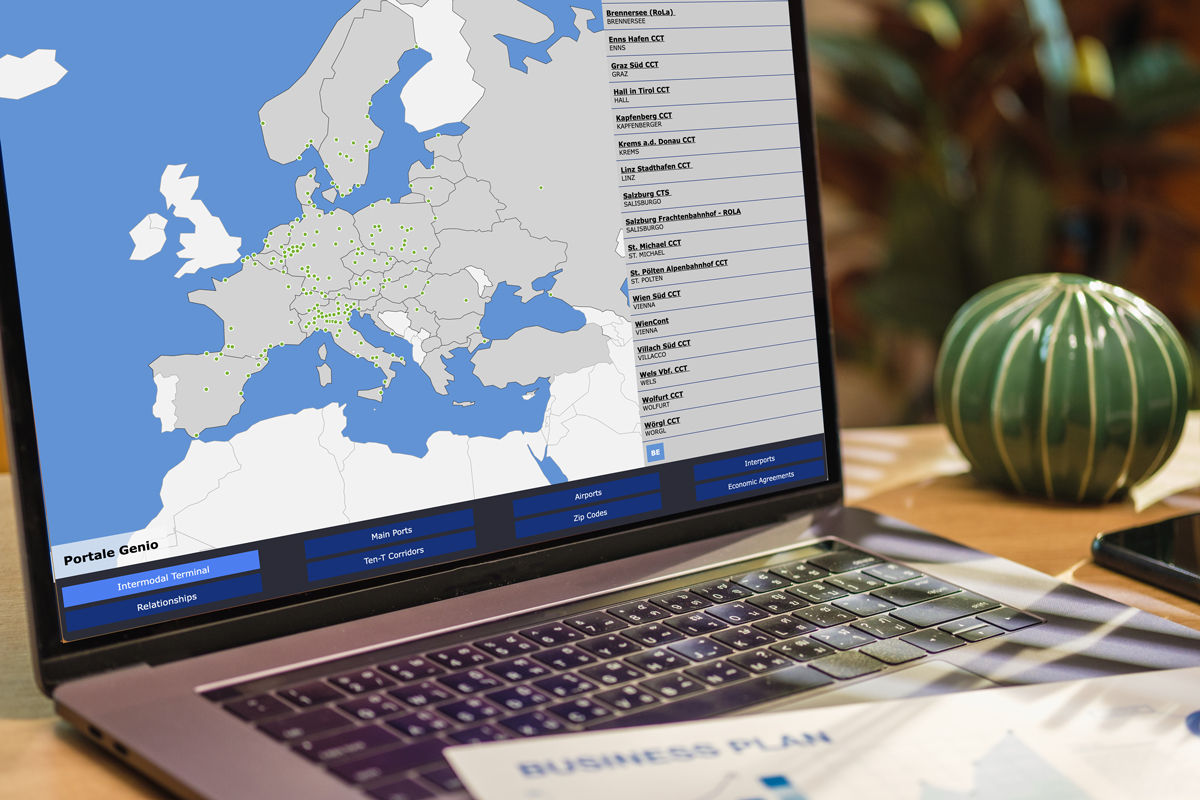
Nearly a year later (you may recall that Verona hosted LetExpo last March), the words of Enrico Letta — former Prime Minister and author of the report on the future of the EU internal market — sound more relevant than ever:
“We are too small to face global challenges. What we need is a more integrated, more competitive, and more cohesive Europe, especially when it comes to key issues like defense, finance, and logistics.”
In a conversation moderated by Economy magazine’s editor-in-chief Sergio Luciano, Letta emphasized how Europe, without unity and a shared vision, risks becoming irrelevant on the global stage, where powers like China and the United States move forward with coordinated strategies. “We made a huge effort to build the Euro, and thank goodness we did. Now we need the same commitment to create an integrated logistics infrastructure and a single capital market,” he stated.
PortaleGenio: A Concrete Tool for Logistical Integration
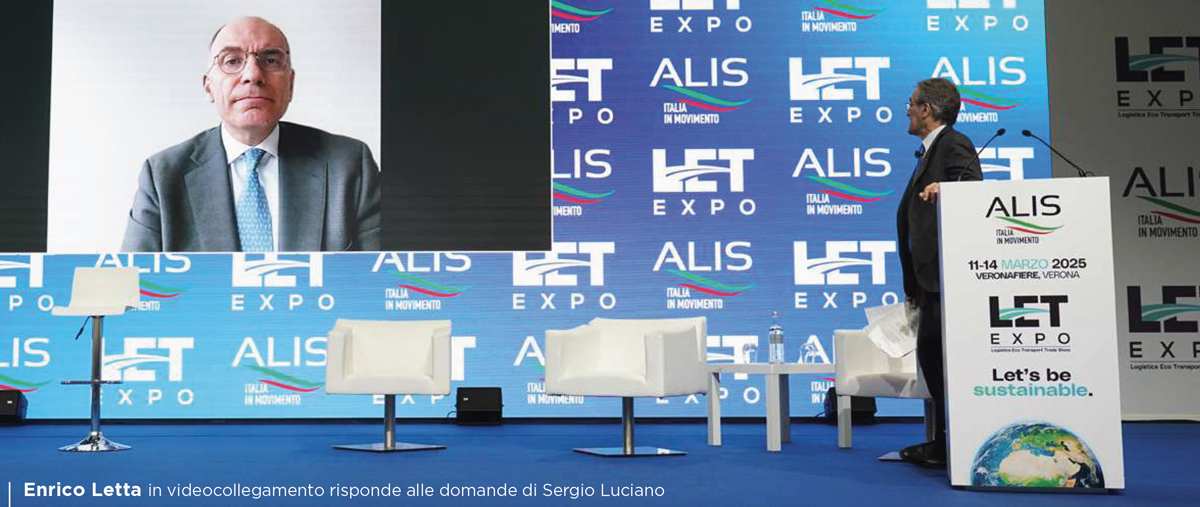
In this context, tools like PortaleGenio represent a concrete step toward overcoming logistical fragmentation and bringing territories closer together. PortaleGenio is an informative WebApp designed to support companies, logistics operators, and policymakers in understanding and leveraging the potential of the European intermodal network.
At the core of the portal lies its interactive digital map, offering a simple and intuitive way to explore:
- Rail and Ro-Ro connections across Europe and the Mediterranean basin.
- Detailed profiles of infrastructures such as ports, interports, and terminals, including technical data, functions, and companies operating on-site.
- Simulations of alternative routes to traditional road transport, helping users make more sustainable and cost-effective choices.
- Operator directories, with categorized lists of logistics providers located within or near the main hubs, complete with contact options and promotional spaces.
The WebApp is organized into eight main thematic sections, each accessible via user-friendly buttons. Users can browse by country or topic, ensuring high flexibility in data consultation.
Thanks to PortaleGenio, users gain a clear and detailed visualization of the intermodal landscape across Europe — a sector often considered complex and fragmented — making it more transparent and accessible for everyone.
New Governance for a New Europe
Letta also stressed the need to move beyond unanimity in EU decision-making, advocating for regulatory simplification and governance reforms that allow the single market to function effectively. “Each country has a different commercial code: this is not a Union, it’s chaos. We need a single European rule,” he stated.
PortaleGenio perfectly aligns with this vision: it is an informative tool designed to bridge knowledge gaps between regions and countries, creating a shared logistical language and promoting common standards. The WebApp, available in both Italian and English, is free to access, regularly updated, and contributes to the goal of sustainable, interconnected mobility.
Optimism and Cohesion: The Answer to Global Instability
Despite current difficulties and geopolitical tensions, Letta remains optimistic: “The chaos stirred up by Trump and other international players is paradoxically bringing EU countries closer together. We need a unified response, including in defense, and tools that connect rather than divide.”
In building this common response, logistics and sustainable mobility will play a crucial role in 2026. Digital technology, when used wisely, can become a powerful catalyst. From this perspective, PortaleGenio is not just an informative portal — it’s a digital compass to help navigate the future of European mobility.