


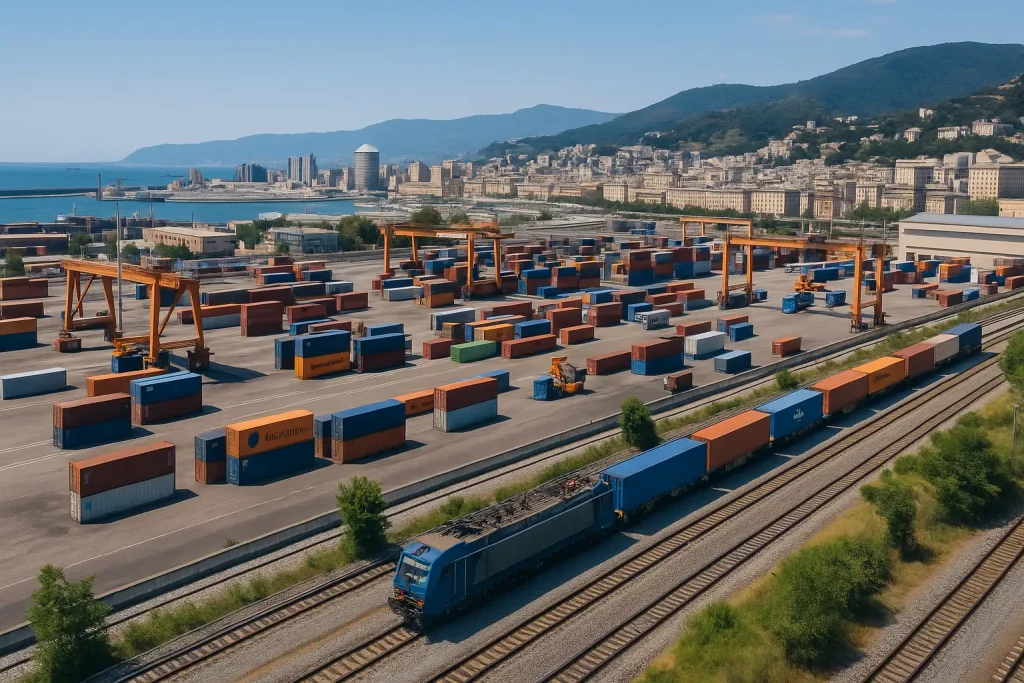
The conference “Port of Genoa – Milan – European Corridors: Intermodality, Safety, Sustainability and Responsibility”, held at the Politecnico di Milano, offered a concrete overview of the challenges and opportunities facing the Italian logistics sector.
At the heart of the discussion was Italy’s strategic role along the “Silk Road” and in trade routes connecting to the Far East. Genoa remains a crucial gateway for goods entering and exiting Europe, thanks to its expanding inland port system and its growing connection to the intermodal hub in Alessandria — opening new distribution routes toward Northern Italy and beyond.
National Logistics: Critical Issues to Address
Today, Italy’s logistics sector employs over 1.4 million people across nearly 80,000 companies — the vast majority of them small-sized. This fragmentation, coupled with limited investment capacity and low levels of digitalization, holds back competitiveness on a European scale.
Infrastructure gaps, insufficient rail-road integration, and a general lack of intermodal planning culture remain major obstacles to unlocking the full potential of the national logistics network.
Intermodality and European Corridors: A Clear Path Forward
The shift toward more sustainable transport depends heavily on rail. European transport corridors offer a unique opportunity to enhance connectivity between strategic ports like Genoa and key destinations throughout Europe, with Milan acting as a central logistics hub. Investments in new rail routes, intermodal terminals, and system interoperability are essential pillars of this transformation.
In this context, digital tools are playing an increasingly important role. Platforms like PortaleGenio, which offer real-time visualization of intermodal connections and relevant operators across the territory, help logistics professionals make faster, more informed decisions — improving route planning and the overall sustainability of freight transport.
Digitalization and Governance: The Real Game Changers
Beyond infrastructure, a shift in governance is also needed. As highlighted during the conference, the efficiency of a port or logistics hub doesn’t depend solely on physical structures — it relies on coordination between public and private stakeholders and on the availability of timely, integrated data.
That’s why the transition toward a more fluid and sustainable logistics system requires not just operational investments, but also a broader cultural shift toward intermodality. This can be supported by informative tools such as the PortaleGenio WebApp, designed to facilitate access to logistics data and make comparing transport alternatives easier and faster.